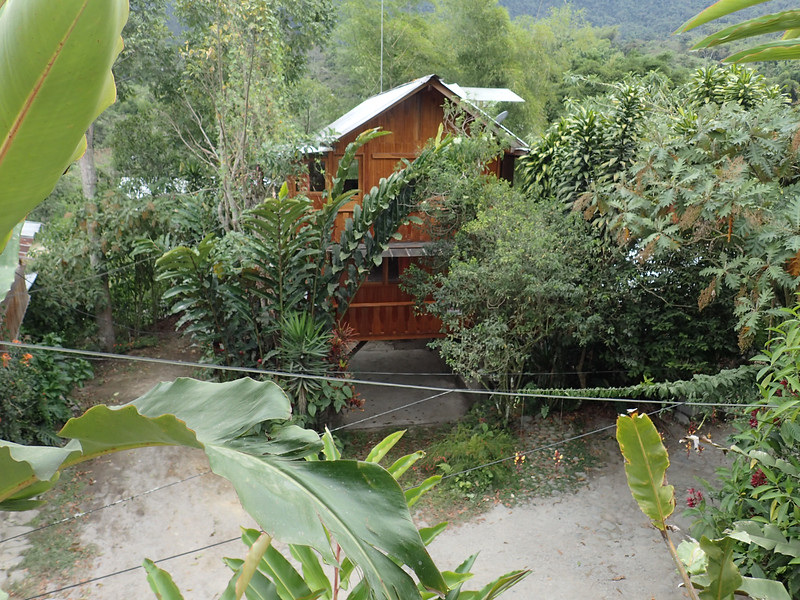
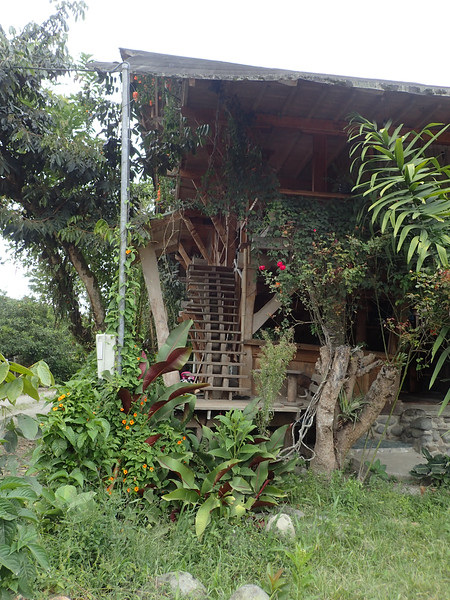
 | Mindo has bit of old school communal beliefs. Ingo sends us up to the ticketing gal next to the hotel in town, so that she get a $.50 cut on each ticket. The tickets are the same price at the Cacao tour as the off-site ticketing gal, so why not spread the wealth a bit, eh? We enjoy walking a few blocks to the Cacao facility. We navigate a series of short streets, and delight at all the architectural goodness, tree houses galore! |
 |  |
Some other interesting points along the way. The juxtaposition on this sign is strong!
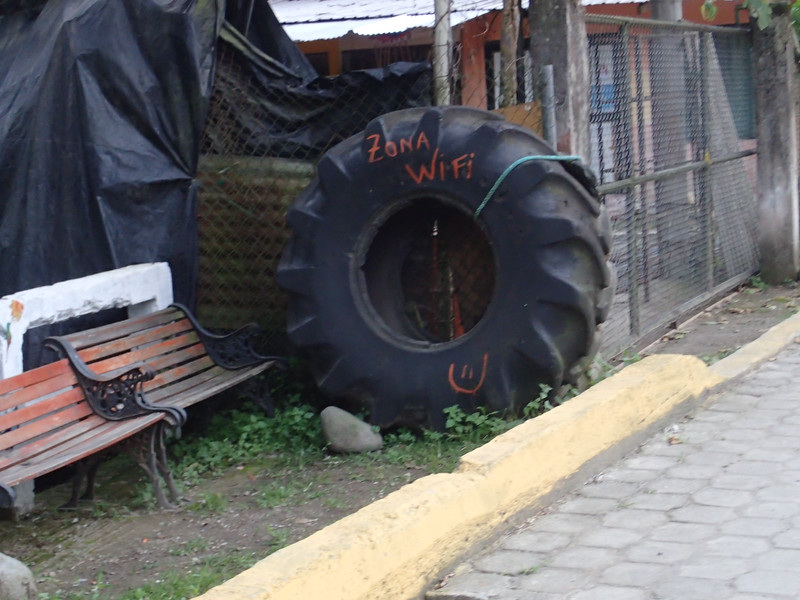
Shortly after we arrive the tour begins. It seems the touristas don't speak a common language: Spaniards, English, a group of Germans. Fortuitously, they are able to break us all into perspective groups, each lead by a native speaker.
We spoke a bit earlier about Cacao. Ecuador, has a few varieties, the Nationale, which a yellow pod when ripe. The Nationale, has apparently benefitted from the volcanic erruptions over the centuries, and has a very high Cacao content. In fact, much of the Ecuador nibs will ship to Switzerland as the Cacao will retain its' rich aromas and flavors when liquified for candy making. Up until the Cacao blight in the 1920s, Ecuador was the top producer. Today, they are the 4th producer. Africa, specifically West Africa, produces 70% of the worlds Cacao. It's funny with all the Ebola in the news recently, nobody has said a word about CaCao production falling.
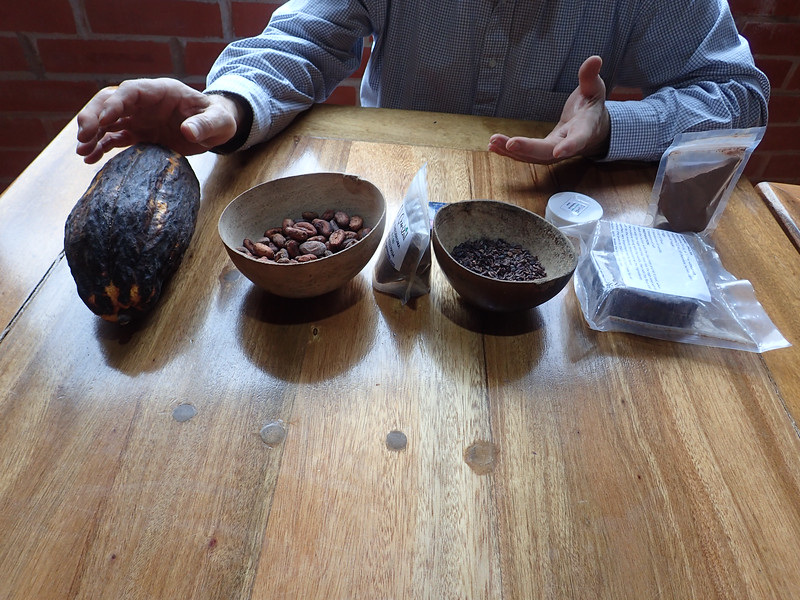
This picture has the entire sequence of Cacao harvesting from pod(far left), to seed (left bowl) to nibs (right bowl). We'll look at each step next.
We spoke a bit earlier about Cacao. Ecuador, has a few varieties, the Nationale, which a yellow pod when ripe. The Nationale, has apparently benefitted from the volcanic erruptions over the centuries, and has a very high Cacao content. In fact, much of the Ecuador nibs will ship to Switzerland as the Cacao will retain its' rich aromas and flavors when liquified for candy making. Up until the Cacao blight in the 1920s, Ecuador was the top producer. Today, they are the 4th producer. Africa, specifically West Africa, produces 70% of the worlds Cacao. It's funny with all the Ebola in the news recently, nobody has said a word about CaCao production falling.
This picture has the entire sequence of Cacao harvesting from pod(far left), to seed (left bowl) to nibs (right bowl). We'll look at each step next.
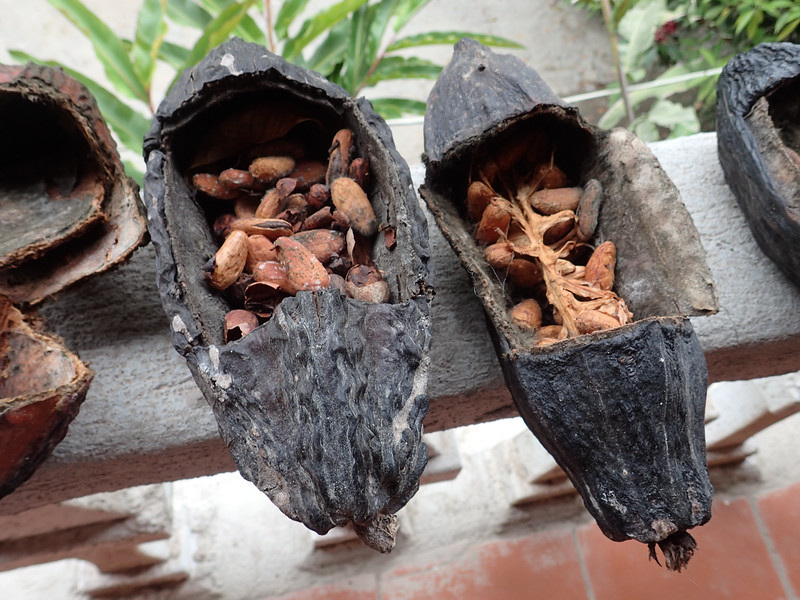
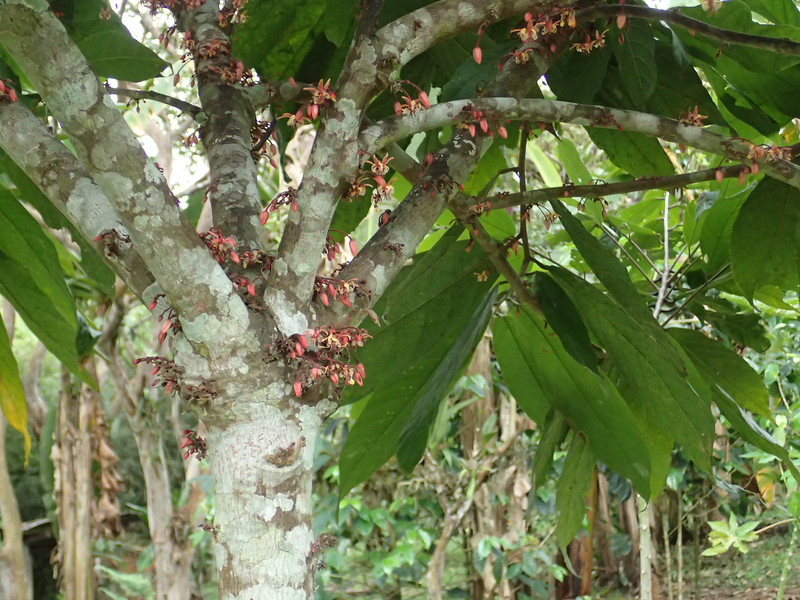
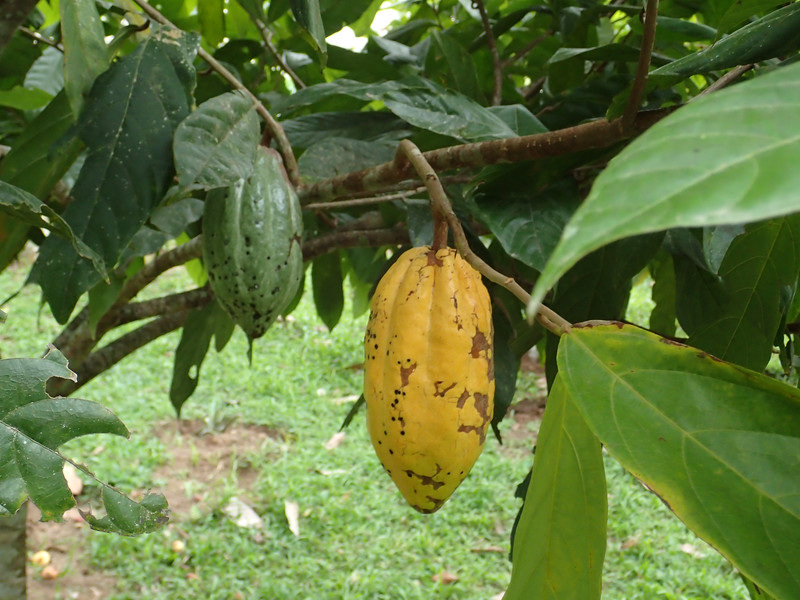
A Cacao tree has a productive lifespan of 40-80 years, which depends largely on it's care. The tree is not mature until 7 years of age, when it will be flowering. The flower buds on the left are waiting for bee pollination. The pod (on right) are ripe when they turn yellow. It takes about 4 months from pollination of the flower bud to ripe pod.
 |  |
They "shuck" the pods right at the tree.
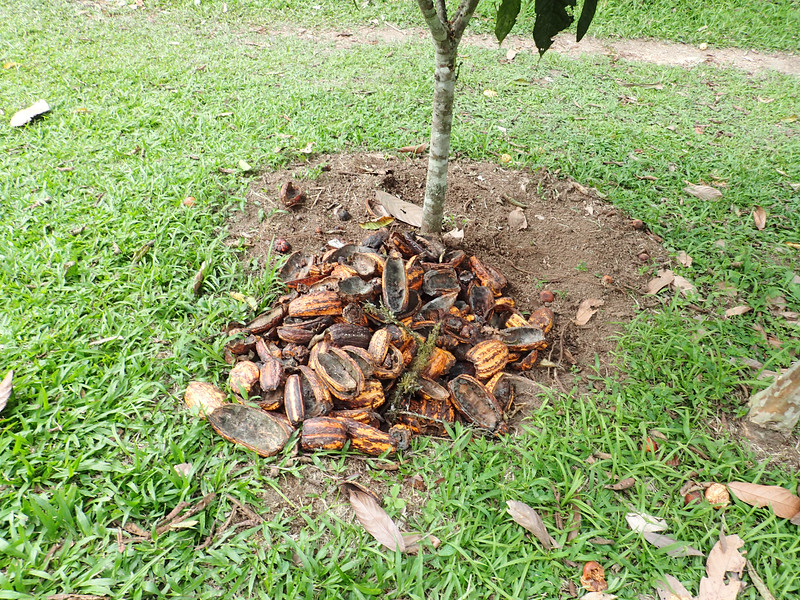
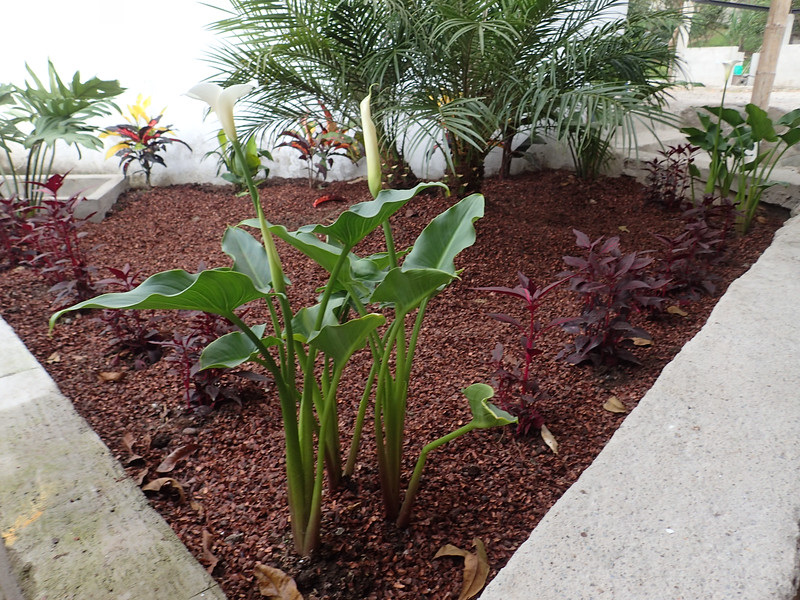
In the land of no waste, the hulls are useful for mulching. And it smells so sweet to boot! Veterinary professionals in the US recommend against the use of Cacao mulch, as high content chocolate can be toxic to dogs. However, there is no shortage of dogs in Ecuador, and this is a pretty common practice.
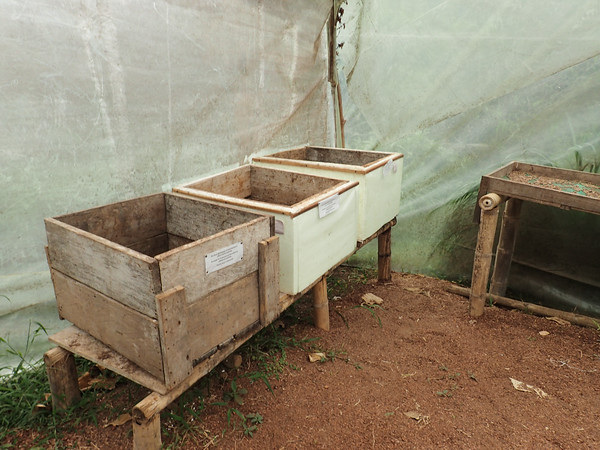 | The beans will then spend their next few days fermenting in wood bins like these. The beans will have a rotation in each bin, then transfer to the next bin and new banana leaves. |
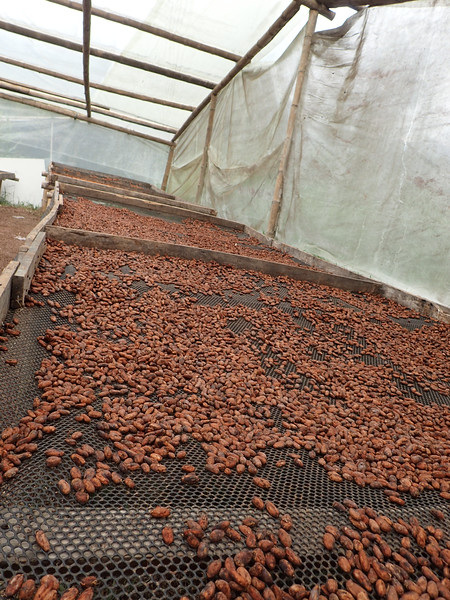 | It's out of the fermenting bins, and onto the drying table. This one is a a bit more civilized that the ones we had previously seen, as it in a large tarped room. |
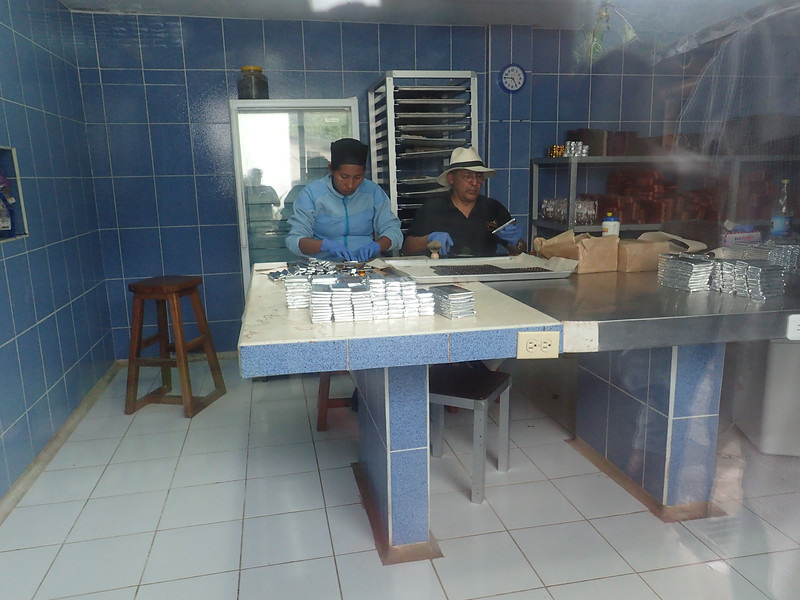
Processing Equipment. This place had quite a sense of small business owner pride. He employed 20 persons, and was the top employer in Mindo!
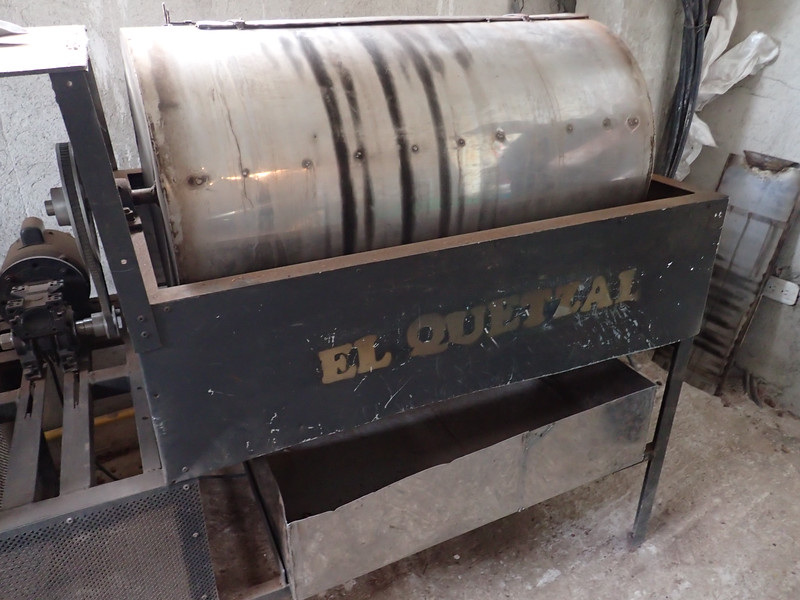 | 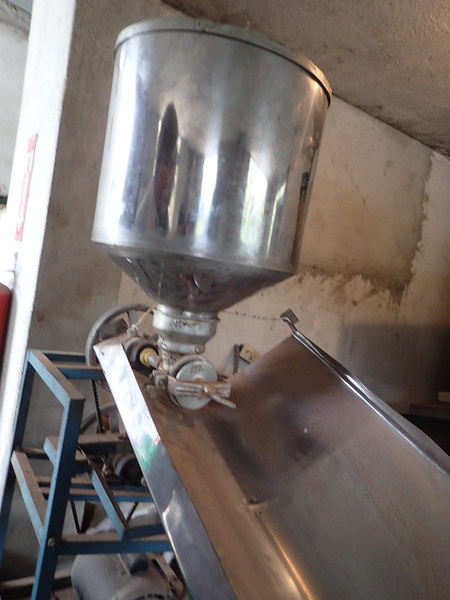 |
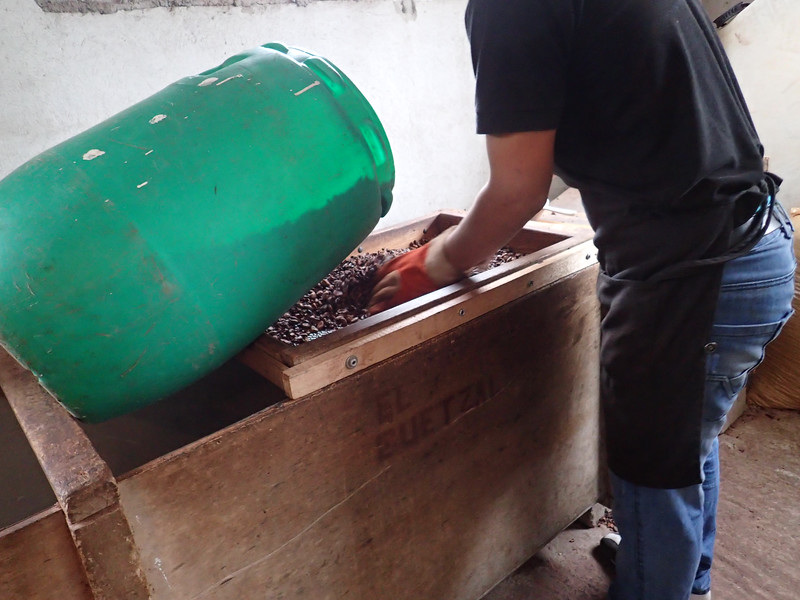
Sorting the nibs by hand
This room is kept at a high temperature
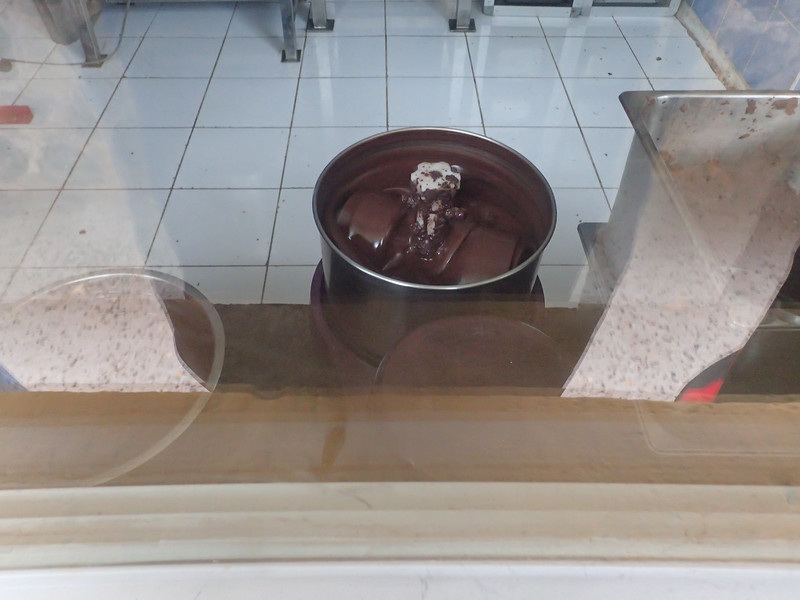
And something you'd recognize
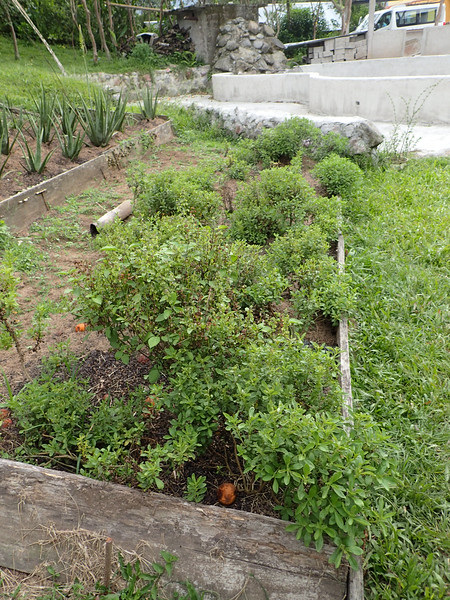
They are working a diabetic friendly version of chocolate bars. They have been growing Stevia (a natural sweetener). He plucks off a single leaf for us to try. Wow, a little bit goes a LONG way in sweet.
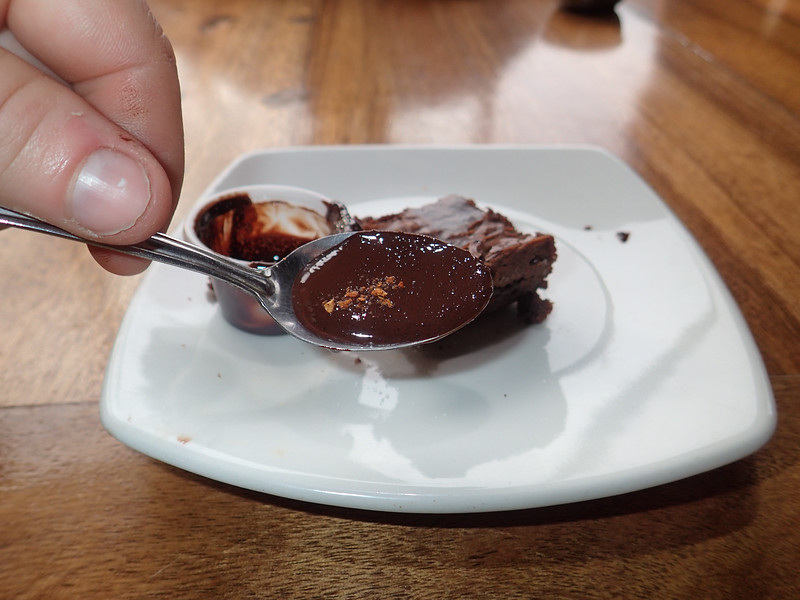
Who doesn't love a tour that has a happy ending. In this case, we'll eat the Cacao much like the Incans might have. The has a drink of crushed red pepper, Cacao, ginger and honey. High in anti-oxidants, their warriors were unbeatable for many major battles. The drink mix traveled with them to Aztecs in Mexico, when the Spaniards popularized it in Europe.
The tour ends with other uses besides chocolate. Apparently, a side product is used to make Balsamic vinegar. And of course, CoCo butter and the Chocolate mulch are beginning to take off in popularity.
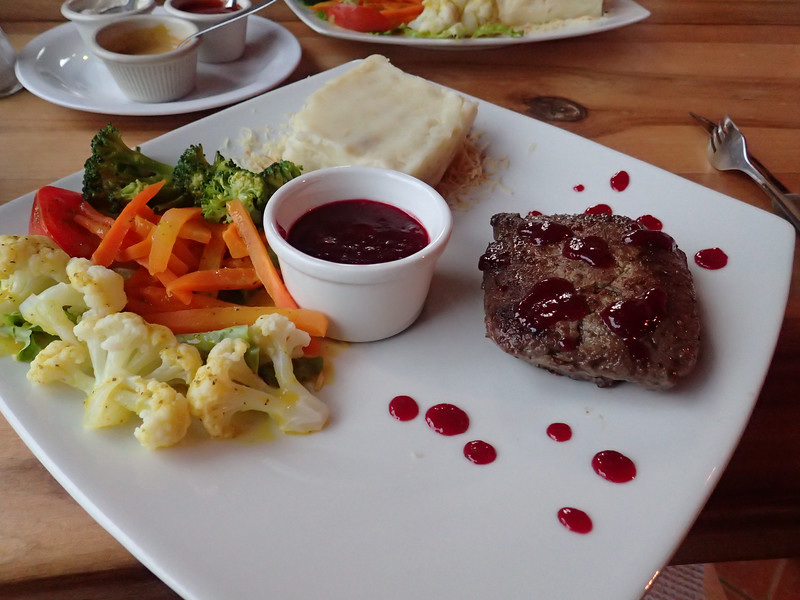
We end the evening with a lovely German dinner back at the Dragon Fly Inn--meat and potatoes. Notice the use of common use of natural sauces from local fruits.
We end the evening with a lovely German dinner back at the Dragon Fly Inn--meat and potatoes. Notice the use of common use of natural sauces from local fruits.